But what if you have no transplant contract?

Most health plans have contracts with hospitals or medical centers that perform organ and tissue transplants. And, through Summit Re, clients have access to U.R.N.’s Transplant Resource Networks and Transplant Access Program. Most reinsurance agreements provide more favorable coverage for organ and tissue transplants performed in “approved” facilities than for those performed in "unapproved" facilities. The health plan typically submits its contracted rates to the reinsurer during the underwriting process and the reinsurer determines if the contracts will be “approved” or not.

Standard approach

At Summit Re/Swiss Re, that’s our standard approach as well. We usually provide 90% coinsurance for approved contracts (we use the term “scheduled”) and 50% or 60% for unapproved or unscheduled contracts. We list the scheduled contracts on Exhibit A, part of our reinsurance agreement. We consider U.R.N.’s transplant network facility contracts to be scheduled. Usually those contracts our clients hold directly are also scheduled if they are similar to U.R.N.’s.

A potential problem

But what if a member needs to go to a facility that isn’t part of U.R.N.’s network and with which the health plan has no contract for transplants? When the plan tries to negotiate a rate for that member, how will the plan know how the reinsurer will view the arrangement?

Usually the plan won’t know unless the terms are submitted to the reinsurer for review in advance of the transplant, each and every time such a situation arises. This can be frustrating for the health plan and means additional work for the reinsurer.

Summit’s solution

At Summit Re, we recognized this issue early on and took steps to make things easier for you. We developed another exhibit, Exhibit B, which helps our clients determine their reinsurance overage for unscheduled transplants up front.

We list specific case rates we consider to be scheduled for each type of transplant. We show rates for inpatient hospital services only and rates that include professional services. We show a separate set of rates for children and a set for adults. We include rates for all three types of bone marrow/stem cell transplants – even those performed on an outpatient basis.

If the health plan can negotiate case rates that are equal to or are better than the ones shown on Exhibit B, then the claim is reimbursed at the higher coinsurance level. There’s no need to send anything to us for “approval.” You already know the level of coinsurance that applies.

Not a cap

There’s one more very important point to remember, though. The rates listed on Exhibit B do not represent limits on what we consider to be eligible amounts under the reinsurance agreement.  They do not represent caps on case rates. Amounts in excess of the listed case rates are not excluded. If a health plan simply can’t negotiate a rate that is equal to or lower than the Exhibit B rate, it just means the claim would be reimbursed at the lower coinsurance level.

This is just another example of Summit Re’s putting into practice its “fairness” Founding Principle to produce balance sheet stability for you.

Best of Both Worlds: Self-Funding and Managed Care

To control the rising costs of providing a medical benefit program, some employers look to self funding. HMOs that can offer administrative services only (ASO) or affiliate with third party administrators (TPAs) can bring both a self-funded approach and managed care programs to employers.

Selecting an MGU

HMOs who participate in the employer stop loss market should carefully select a managing general underwriter (MGU) with expertise in both managed care reinsurance and the self-funded market. Your MGU should also have full-service capabilities. Summit Re is a full-service MGU focusing on HMOs who participate in the employer stop loss market. Our managed care experience sets us apart from traditional employer stop loss carriers and managing underwriters.

Pricing and Underwriting

Summit Re’s staff of underwriters and actuaries is dually equipped to understand this combination of funding and managed care savings. We apply our knowledge in the development of competitive stop loss rates and aggregate funding factors for your self-funded clients. As one of the market leaders in HMO excess reinsurance, we have a unique understanding of HMOs and their excess medical risk. We review not only your provider contracts, but also your managed care protocols and your HMO experience.

Sales Support

Summit Re takes an active role in helping you place self-funded business. We are a phone call away to discuss strategy on individual accounts. In unique situations, we can assist you in the on-site presentation of the stop loss proposal to the employer. Once a group is sold, we focus on servicing the account.

Integrated Administration

Our rating and proposal system is fully integrated with our stop loss contract production, premium collection, and claims payment modules. This results in proposal-based policy issued quickly, accurate premium accounting, and timely claim payments. We also have an experienced staff in each functional area to ensure that personalized service isn’t forgotten.

Risk Transfer Flexibility

Summit Re works with two carriers who provide the employer stop loss product: Companion Life Insurance Company and Presidential Life Insurance Company. These two carriers allow Summit Re to write this product in all 50 states.

If you want to retain some of the risk but do not have an insurance company, there are certain approaches we can use that allow you to assume a portion of the risk written by one of our insurance company partners and managed by Summit Re.

If you have an insurance company to write the employer stop loss product, your carrier can keep some or all of the risk. Summit Re can provide some or all of the MGU services, or your insurance company can perform all the functions with Summit Re providing consulting services in specific areas.

Summit Re’s goal is to be creative, responsive and entrepreneurial, to help you meet your strategic goals for employer stop loss, whatever they may be!

Clinical Notification Triggers

The clinical notice form should be used by the medical management staff to notify Summit Re of potential cases where Summit ReSources may be of assistance to you. Use the clinical notification triggers list as a guide. The list is not all inclusive, so feel free to submit a clinical notification on any case for which Summit Re may be of assistance to you.

Diagnosis

  • High cost pharmacy, such as Flolan, Factor VII, Factor VIII, Cerezyme / ICD-9: 272.7, 286.0, 415.0, 416.0, 416.8 
  • Major burns with a potential for a prolonged hospitalization / ICD-9: 941.0, 942.0, 943.0, 945.0, 948.2-9
  • ESRD/dialysis with monthly dialysis costs greater than $10,000 / ICD-9: V56.0, V56.8, V45.1 
  • Major injuries or multiple trauma with a potential for a prolonged hospitalization and/or acute rehabilitation admission
  • Premature infants with one or more of the following:
    • gestational age ≤ 24 weeks / ICD-9: 765.0 
    • severe congenital heart disease, e.g. hypoplastic left heat, Tetralogy of Fallot, etc. / ICD-9: 746.7, 746.01, 746.89, 745.2
    • severe gastrointestinal anomalies, e.g. gastroschisis, omphalocele, necrotizing enterocolitis, short bowel syndrome, etc. / ICD-9: 756.79, 777.5, 777.8, 579.3, 756.79
    • severe bronchopulmonary dysplasia requiring long term ventilator treatment / ICD-9: 770.7

Case Characteristics

  • Out of network services with minimal or no negotiated discounts
  • Billed charges that greatly exceed reasonable and customary for the services rendered – refer before the claim is paid
  • Questionable charges, such as unbundling or experimental treatments
  • Cases with the potential to exceed the reinsurance deductible
  • Multiple inpatient stays

Submission Process for Clinical Notices

  1. Use the clinical notification triggers list as a guide for completion of clinical notifications submitted to Summit Re.
  2. It is recommended that the clinical notices be submitted from the medical management department as they are usually the department first notified of a request for services.
  3. Complete the Clinical Notification Form (all sections that apply to your case).
  4. Completed forms may be faxed to 260-469-3014, emailed via encrypted software to claims@summit-re.com, or mailed to Summit Reinsurance Services, 7030 Pointe Inverness Way, Suite 350*, Fort Wayne, IN 46804.
  5. In lieu of the clinical notification form, you may submit a report containing similar information.

*Address updated when this article was converted to this post in 2014.

Early Intervention Goal of New Clinical Notice Process

To better assist you in managing your risk and to minimize paperwork, Summit Re has significantly revised the notification process for high cost, catastrophic cases. The main goal of the revised process is to help you manage your risk while there is an opportunity to intervene. Under the current HMO reinsurance agreements, clients are required to notify Summit Re of members whose eligible expenses have reached 50% of the deductible. Currently, Summit Re receives the majority of the 50% notices from finance or claims departments. By this time, the claims have already been paid by you, and it is usually too late to implement any additional interventions that may help mitigate costs, as illustrated in the two examples below.

Summit Re will no longer require submission of a 50% notice report from the finance/claims area. Instead, we are requesting clinical notices from the medical management department. The clinical notices will be much more actionable, since services may still be in the pre-service negotiation phase, the case may be undergoing concurrent review and claims have not yet been paid.

As reinsurance agreements are renewed, the language regarding 50% notices will be revised to reflect the new process. The revised referral trigger list (CLICK HERE) keeps the focus on situations where Summit Re may be of assistance to you.

late notification

Schedule an Inhouse Case Management Seminar

To help your staff keep current with case management trends and standards of practice, Summit ReSources is offering a free case management seminar. This seminar has been approved for 3.5 contact hours by the Commission for Case Manager Certification (CCMC).

The seminar topics include standards of practice, trends in case management and benefits of case management. We will also personalize the seminar by discussing the successes and challenges of your case management program.

Summit Re clients can schedule the free seminar for their teams by contacting:

Debbie Stubbs, RN, MS, CCM, Managed Care Specialist
260-407-3979 / dstubbs@summit-re.com

Information-Based Decisions with TransAdvise

URN’s TransAdvise is a new complimentary service for our clients who have contracts with URN. TransAdvise clinical consultants can assist you and your members by providing information about transplant-related diagnoses and treatment options. A dedicated team of transplant nurse experts who work with more than 12,000 transplants each year are available to provide:

  • Transplant program performance information (e.g. annual volumes and outcomes) to help patients make more informed decisions about their transplant care.
  • Information about relevant clinical trials and treatment protocols based on diagnosis or underlying condition.
  • Assistance in referral to Transplant Centers of Excellence Network programs to maximize clinical and financial outcomes.

These services help you and your members make more informed decisions about transplant care with the goal of better outcomes.

Access to TransAdvise is direct, flexible, easy, and free to our clients. Simply call (800) 343-4305 to speak with a TransAdvise clinical consultant or provide this number directly to your members. TransAdvise clinical consultants are available from 7:00 a.m. to 6:00 p.m. CST, Monday through Friday. Conference calls with a TransAdvise clinical consultant are also available for you and your members.

Summit Re/URN Transplant Program

The Fall (October) 2005 edition of Summit Perspectives detailed Summit Re’s new transplant program features with United Resources Networks (URN). Some key points to keep in mind regarding the program are:

  • URN access fees are discounted for transplant services on business reinsured through Summit Re. These discounts are not available by directly contracting with URN or through any other reinsurer.
  • URN will extend the Summit Re discount fee arrangements to a new Summit Re client who was using URN through another reinsurer.
  • A Summit Re client does not have to use URN exclusively in order to obtain the discounted access fees for transplant services where URN is utilized on business reinsured through Summit Re.
  • Zero Access Fees (ZAP) is an exclusive URN arrangement with Summit Re. It provides for alternative transplant facility terms with no access fees. These terms can be elected on a case-by-case basis at the time of each transplant referral.

Please contact Debbie Stubbs RN, MS, CCM at dstubbs@summit-re. com if you have any questions or would like additional information concerning the Summit Re/URN Transplant Program.

Manage Your Transplant Risk More Effectively with New Program

Selecting a Network The most important consideration when choosing a transplant network should always be the quality of care delivered.  A secondary but important consideration is the cost effectiveness of the network.  A network that charges access fees but has greater net savings overall due to more favorable negotiated arrangements with network facilities is preferable to a transplant network that charges no access fees but has less effective contracts.

New Program

Summit Re recently conducted a thorough assessment of three transplant networks. (See table on page 3.)   As a result of that assessment, we concluded that United Resource Networks (U.R.N.)  provided the best overall value.  Therefore, we agreed to enter into an exclusive arrangement with U.R.N. for the provision of transplant services for our clients.  We have been able to negotiate lower access fees because of this exclusive relationship.

Access Fees

Under the new program, our clients will have their access fees for each transplant reduced by 5% due to Summit Re’s exclusivity with U.R.N.  An additional 5% reduction can be realized if clients incorporate certain benefit incentives into their plan designs for the use of U.R.N. facilities and use them exclusively.  A third discount is based on Summit Re’s total volume of business with U.R.N.

Make the Change

This program replaces the previous benefit that Summit Re had negotiated with U.R.N. – namely, a waiver of the 35%-of-savings fee U.R.N. normally charges for cases that access U.R.N. facilities but do not result in transplantation.  The current program is still available to existing Summit Re clients who access U.R.N., but we recommend the new program.  Summit Re will contact current clients to discuss the program in greater detail.

Access Fee Discount

Source

5% discount Summit Re’s exclusive marketing of U.R.N. for transplant services
5% discount Client’s exclusivity agreement and benefit differentials
Up to 10% Summit Re’s total volume of business with U.R.N.*

Total Discount: Up to 20%

*This portion of the discounts will be calculated retrospectively by U.R.N. on an annual basis.  The discount is available to clients who have reinsurance coverage through Summit Re that is in effect on the date of the payment to Summit Re.

Transplant Facts: Costs and Incidence

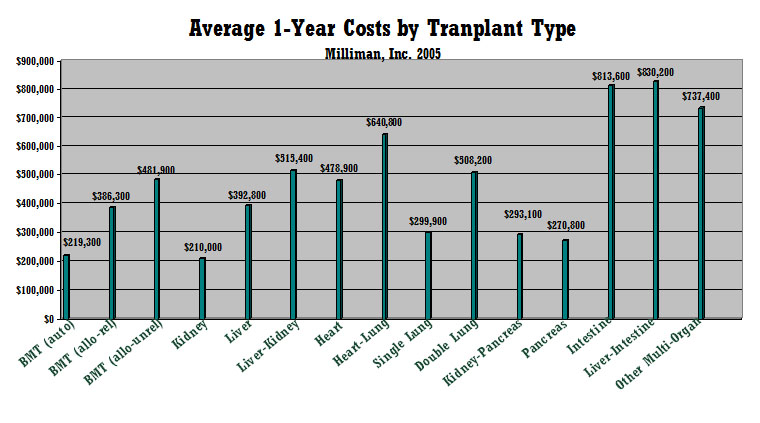
The cost of transplantation can be staggering and continues to rise as new technology and pharmacology become available.  

transplant costs


Incidence of Transplants

According to the United Organ Sharing Network (UNOS), there are currently over 89,000 patients listed for a transplant.  The breakdown of types of transplants as a percentage of the total is shown in the chart below.  There continues to be a disparity between the number of transplants requested and the number of organs available. Only 40% of the patients waiting for a solid organ transplant will get one. To view the current wait list statistics and the number of transplants completed and organs donated, please go to www.unos.org.

transplant incidence


Comparison of Transplant Programs

Summit Re engaged in a stringent due diligence process prior to making the decision to enter into an exclusive agreement with United Resource Networks (U.R.N.) for transplant management. Below you will find a comparison of the type of information we considered:

Size & Scope

U.R.N.

INTERLINK

LifeTrac

Covered lives 46 million 20 million 15 million
Annual transplant referrals 10,000+ 900 1,800
Centers available 108+ 44 47
Average network discount across all five phases 43% 31% 31%
Dedicated personnel (excluding claims repricing):Licensed medical / clinical staff

Support staff

Total


86

97

183


2

10

12


3

6

9

Pricing      

Per diem for all phases of care in most contracts Yes No No
Organ & bone marrow acquisition included in all case rates Yes Some Some
Access Fees $3,500 - $20,000 $3,000 - $13,000 None

Services      

Complete utilization & financial reporting Yes Yes Unknown
Web access to comprehensive medical center data Yes No Yes
Transplant case-management services available Yes No No

Quality & Credentialing

Physician advisory panels 4 No No

Education

Annual education conferences 5+, on-line CEUs On-line CEUs No
Annual client conference Yes No Unknown

Other Products  

Able to take or share economic risk for transplants Yes No No
Specialized pediatric credentialing and network Yes No Yes
Congenital heart disease program and network Yes No No

Disclaimer – Competitor information is based on data available through a variety of sources. Specific detailed information should be sought directly from each competitor to ensure reliable comparison data.